SaaS Customer Problem Validation: How to Know If Your Idea Is Worth Solving

Most SaaS ideas do not fail because the code was bad. They fail because nobody had the problem badly enough to change how they work. SaaS customer problem validation is how you find that out before you spend months building.
There is a big gap between “that sounds useful” and “I hate doing this every week.” Friends will give you the first one. Only a real customer with a real problem gives you the second.
A useful example comes from a YC conversation with founders: Michael Seibel and Dalton Caldwell describe how Airbnb learned from a host by spending time with him and listening to his detailed experience. That kind of conversation can reveal context a quick survey may miss. This guide turns the same customer-first principle into a practical process: run interviews, read the answers, score the evidence, and decide what to do next.
What Is SaaS Customer Problem Validation?
SaaS customer problem validation is the process of checking that a specific group of people has a painful, recurring problem they already try to solve. You do this with evidence from real customers, not your own assumptions.
It is different from product validation. Problem validation asks, “Is this worth solving?” Product validation asks, “Does my solution solve it well enough that people will use and pay for it?”
Order matters. If you skip the first question, even a beautiful product answers the wrong one. A good first step is to validate your SaaS idea before building, then use this article to go deeper on the problem itself.

How to Know If a SaaS Problem Is Worth Solving
A problem is worth solving when a specific person feels it often, feels it strongly, and already spends time or money working around it. Four checks help you test that.
Identify a Specific Target Customer
“Small businesses” is not a customer. “Operations managers at agencies with 5 to 20 people” is. The tighter your definition, the easier it is to find people to talk to and to spot patterns in what they say.
Find a Recurring and Painful Problem
Look for problems that show up weekly or daily, not once a year. Repetition is what makes software worth paying for.
Consider this illustrative example – not a real founder interview or company. An ops lead at a six-person agency spends three hours every Monday copying numbers from four tools into one client report. Reports go out late, and clients ask where they are. The useful validation question is not “Would you use an automated report?” but “Walk me through the last time a report went out late. What did that delay cost?”
Understand How Customers Solve It Today
Most real problems already have a workaround. It might be a spreadsheet, an assistant, a messy email thread, or a tool used for the wrong job.
If you cannot find a workaround, investigate further: the problem may be low-priority, rare, or difficult for customers to address. Lack of a workaround alone does not prove that the problem is unreal.
Check Whether Customers Will Pay to Solve It
Pain does not always mean budget. Ask who pays for the current workaround, how much time it eats, and who signs off on new tools. You are listening for money, time, or risk that someone already cares about.
Steve Blank’s customer development principles start from a simple rule: the facts you need are outside your building, so go and talk to customers.
How to Validate a SaaS Problem Without Building an MVP
You do not need to build software to investigate whether a problem is real. Start with customer interviews and existing feedback; use a landing page or manual test only after you can describe the customer and problem clearly. For the broader process of testing a startup idea before development, see our guide to validating a SaaS idea before building.
Choose a Lightweight Test
- Customer interviews: Learn who experiences the problem, when it happens, and what it costs.
- Existing feedback: Review support threads, community discussions, and competitor reviews for repeated complaints.
- Landing page: Test whether a clearly defined audience takes an action, such as signing up or asking for details.
- Manual or concierge test: Deliver the outcome by hand to learn whether customers will engage with the result.
These methods provide different signals. Treat clicks and signups as early interest – not proof of payment or product-market fit.
For practical guidance on talking to users, explore YC’s Startup Library, including Dalton Caldwell and Michael Seibel’s advice on learning from customers. The specific page was checked: it loads and its topic matches customer learning and founder-customer conversations.
A Real Case Study: How Buffer Tested Demand Before Building
Joel Gascoigne, Buffer’s founder, described his first tests in a 2011 post on the Buffer blog, Idea to Paying Customers in 7 Weeks. The “7 weeks” in the title is how long it took him to build the first version in evenings and weekends. The validation came first, and it was small.
Here is what he did, in his own order:
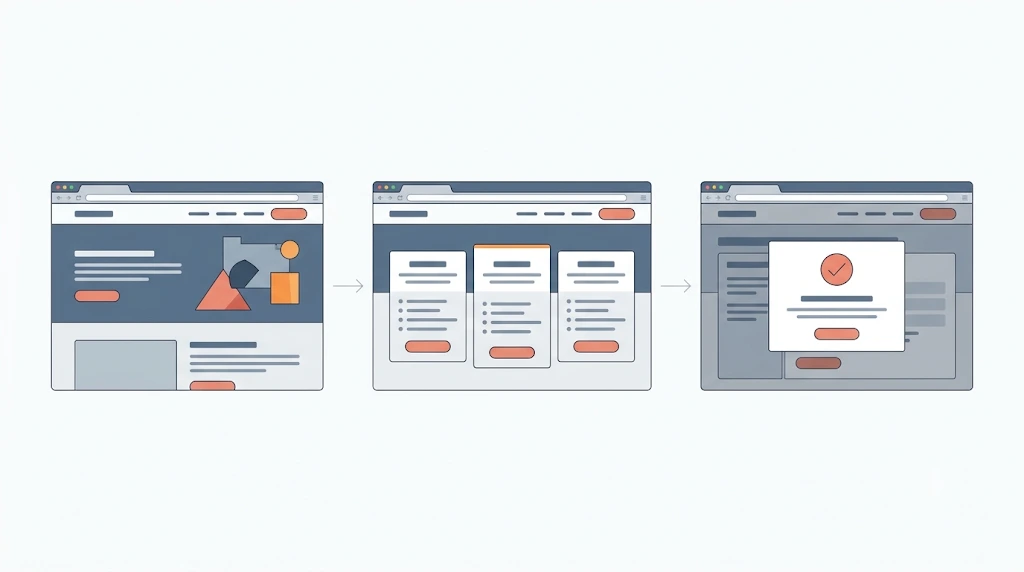
- A two-page site. He put up a simple page describing the idea, tweeted the link, and asked people what they thought. A few people left their email, and some sent feedback by email and Twitter. These were early interest signals, not proof of a paying market.
- A pricing page in the middle. To test whether people would be comfortable paying, he added a pricing page between the two original pages. Visitors needed one extra click before leaving their email.
- The result. People continued leaving their email, and a small number clicked paid plans. These actions gave him a stronger early signal to investigate, but they were not completed purchases.
Gascoigne also wrote that he had started coding before testing the business, then stopped and tested first. After launch, he used incoming emails to ask people whether the problem mattered to them.
What founders can take from it:
- The test measured actions (clicks, signups, replies), which are more informative than hypothetical praise – but still weaker than a purchase or other meaningful commitment.
- One extra step tested willingness to pay without any product.
- The test was cheap, so being wrong would not have cost much.
A fair caution: his own post describes small numbers and uses words like “probably” about early demand. It shows a sensible first test, not a formula. It also tested demand for a clear idea. Interviews are still how you understand the problem behind it.
Questions to Ask Customers Before Building SaaS
Good questions are about the customer’s past and present, not your idea. Strategyzer’s customer interview techniques focus on interviews that produce evidence you can act on, rather than pages of loose notes.
Here are ten questions to start with.
Questions About Their Current Workflow
- Walk me through the last time you had to [do this task]. What happened first?
- Which tools and people were involved?
Questions About the Problem’s Frequency and Impact
- How often does this happen?
- What did it cost you the last time, in time, money, or missed deadlines?
- What happens if you leave it alone?
Questions About Existing Solutions
- What have you tried to fix this?
- What do you dislike about your current setup?
Questions About Budget and Buying Decisions
- Who decides whether to buy a tool for this?
- What have you paid for in this area before?
- If this disappeared tomorrow, who would care most?
End every call with: “Who else should I talk to?” It is the easiest way to find your next interview.
How to Validate a B2B SaaS Problem With Customer Interviews
B2B adds a wrinkle: the person who feels the pain is often not the person who approves the budget. To validate a B2B SaaS problem with customer interviews, you need both views, and you need to see how they line up.
Choose the Right Interview Participants
Interview two groups. End users can describe the daily friction. Decision-makers can tell you how purchases get approved and what budget exists. Aim for a mix across a few companies, not five people from one team.
Ask About Past Behavior, Not Hypothetical Ideas
Use the same past-tense approach with each role, but change the topic. Ask the end user about the last time the task went wrong. Ask the buyer about the last tool they bought in this area and how that decision was made. Their answers show who really holds the pain and who holds the budget.
Identify Patterns Across Interviews
Compare what end users and decision-makers say. If users complain loudly but managers shrug, the problem may not clear the bar for a purchase. If both name the same cost, you have a stronger pattern. Look across companies, too, since one firm’s habits can look like a market.
Document Evidence and Validate Key Assumptions
Before the calls, write down your assumptions about the user, the buyer, and the budget. After each call, mark each one as supported, weakened, or unclear.
Polite feedback in B2B looks like this: “Interesting, send me some information,” with no follow-up. Genuine pain comes with a next step, such as an introduction to the person who owns the budget or a request to see a demo.
How to Distinguish a Real Customer Problem From a Feature Request
Customers often describe solutions, not problems. “I need a dashboard” is a solution. Your job is to find the pain behind it.
Understand the Difference Between Symptoms and Root Problems
A request is usually a symptom. Ask “What would that let you do?” and “What happens today without it?” until you reach the cause.
Identify Repeated Requests Across Customers
If several customers ask for different features but describe the same underlying pain, the pain is the signal. If they ask for the same feature for different reasons, look closer before you act.
Separate Isolated Opinions From Strong Evidence
One loud customer is not a market. Strong evidence repeats, comes from your target segment, and ties to a real cost.
Decide Whether a Feature Request Deserves Further Investigation
Investigate when the request points to repeated pain, a clear cost, and an existing workaround. Park it when it is a single opinion or a preference with no cost behind it.
| Customer statement | What it may indicate |
|---|---|
| “I need a dashboard.” | Possible feature request |
| “I spend hours compiling reports every week.” | Possible recurring problem |
| “We miss deadlines because data is scattered.” | Potential business impact |
How to Analyze Customer Discovery Interview Responses
Interviews only help if you can compare them. Strategyzer notes that many teams finish interviews with plenty of notes but no clear direction. This section is about organizing what you heard. The next one is about scoring it.
Categorize Recurring Problems
Give each problem you hear a short label, such as “manual reporting” or “scattered data.” Reuse the same labels across calls, and merge labels that mean the same thing. Then count how many people mentioned each one.
Compare Frequency, Severity, and Existing Workarounds
Line up your labeled problems side by side. For each one, note how often it happens, how much it hurts, and what people do about it today. You are looking for a problem that shows up in several interviews with a costly, clumsy workaround. A comparison table or a simple spreadsheet is enough.
Identify Strong Buying Signals
Tag each piece of evidence as behavior or opinion. Behavior counts for more. Strong signals include asking about price, asking when they can try it, introducing you to a colleague, or already paying for a partial fix. Praise on its own gets tagged as opinion.
Document Contradictory Evidence
Write down every interview that disagrees with your idea. These notes protect you from remembering only the calls that felt good. Keep contradictory evidence beside your decisions so you can revisit what changed your mind. If you publish a dedicated founder decision-log guide, link it here once its exact URL is confirmed.
Copy this template after each interview:
Interview date:
Name / role / company size:
Role type (end user / decision-maker / both):
Target customer? (Yes / Partly / No)

Last time the problem happened (their words):
Problem label(s):
How often / how costly:
Current workaround:
Behavior signals (asked price, asked for a trial, intro to others):
Opinion-only signals (compliments, "interesting"):
Contradictory or surprising points:
Assumptions supported / weakened:
Follow-up action:
SaaS Customer Problem Validation Scorecard
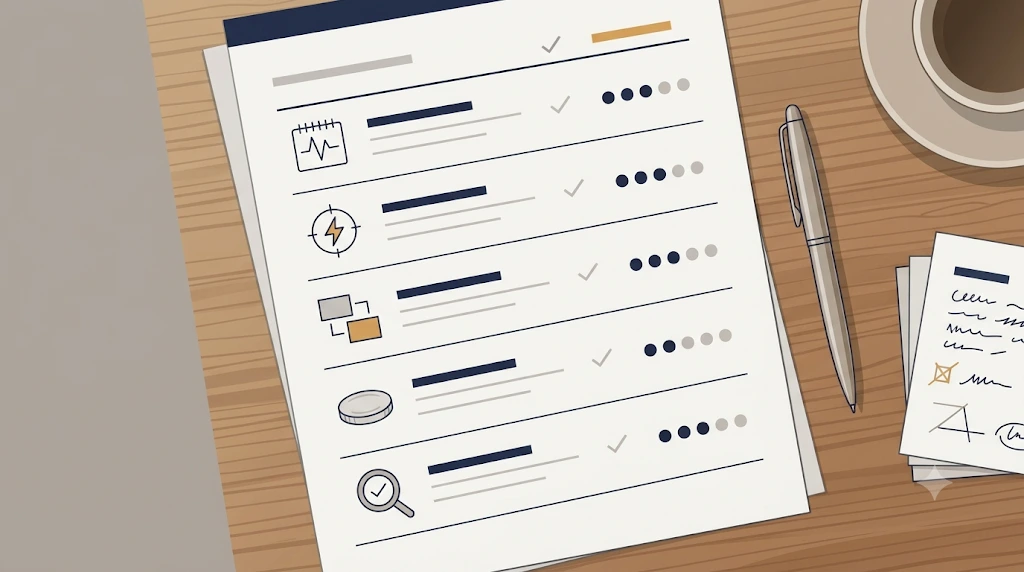
A scorecard turns your organized evidence into a decision. Use the labeled problems from your interview analysis and score each one from 1 (weak) to 5 (strong).
| Criteria | Score 1 looks like | Score 5 looks like |
|---|---|---|
| Problem frequency | A few times a year | Daily or weekly |
| Severity of customer impact | Minor annoyance | Missed revenue, deadlines, or compliance risk |
| Existing alternatives | No workaround identified | Painful workaround people already pay for |
| Willingness to pay | Interest only | Budget owner, past spend, or a stated price range |
| Strength of customer evidence | One or two friendly chats | Many target customers with specific examples |
How to read your total (out of 25): These ranges are a simple rule of thumb, not an industry standard. Adjust them to your market. No workaround can also mean the problem is rare or new, so investigate before scoring it low.
- 20 to 25: Strong signal. Move to a next-step test.
- 14 to 19: Mixed. Refine the customer segment or the problem and run more interviews.
- Below 14: Weak. Reject the problem or rethink the audience.
The scorecard supports your judgment; it does not guarantee that a product will succeed. Read the total alongside the interview evidence, contradictions, customer segment, and buying behavior. Do not proceed or reject an idea based on the number alone.
Common SaaS Problem Validation Mistakes
- Asking leading questions. “Wouldn’t it be great if…?” gets you a yes. Ask about what happened last time instead.
- Interviewing the wrong audience. Friends, other founders, and people outside your target segment tell you little.
- Confusing compliments with buying intent. “Cool idea” is not a commitment. A price question or a trial request is closer.
- Building an MVP too early. An MVP tests a solution. If the problem is unproven, you are testing the wrong thing.
- Ignoring contradictory evidence. The call that goes badly is often the most useful.
- Treating a small sample as proof. A handful of calls gives you a hypothesis, not a verdict. Use the customer interview guide to decide how to think about sample size and when to continue.
What to Do After Validating a SaaS Customer Problem
Once you finish your interviews and scoring, make a clear decision. Put a date on it and a reason beside it.
Decide Whether to Proceed, Refine, or Reject the Problem
- Proceed when the score is strong and the evidence repeats.
- Refine when the pain is real but the segment or framing is off.
- Reject when the pain is rare, mild, or already solved well enough.
Rejecting a problem is a good outcome. It saves you months.
Define the Next Product Validation Step
Choose one test that matches what you still do not know. That could be a landing page, a concierge test, or a paid pilot. Then make learning part of your weekly planning routine so customer evidence informs your next priorities.
Prepare for MVP Development When Evidence Supports It
Build only once you can name the customer, the problem, the workaround, and the signal that they will pay. Then keep the first version small enough to answer one question.
When you are ready to make the next call, use a simple solo-founder decision-making process to record what you learned and why you are proceeding, refining, or rejecting the idea.
FAQs
How do you validate a SaaS problem?
Pick a specific customer group, interview them about past behavior, and look for a repeated, costly problem with a workaround. Then score the evidence and run one small test, such as a landing page or a manual service, before you write code.
How many customer interviews should you conduct?
There is no magic number. Keep interviewing until patterns repeat across people in your target segment, while treating early patterns as hypotheses. For a deeper guide, read how many customer interviews are enough. In B2B, include both end users and decision-makers.
Can you validate a SaaS idea without building an MVP?
Yes. Customer interviews, community research, landing pages, and manual or concierge tests can all show whether a problem is real before you build anything. Buffer’s two-page test is one well-known example.
What is the difference between problem validation and product validation?
Problem validation checks that a specific group has a painful, recurring problem worth solving. Product validation checks that your solution solves it well enough that people will use it and pay for it. Do the first before the second.
How do you know if customers will pay for a SaaS solution?
Look for behavior, not praise. Existing spend on a workaround, a clear budget owner, and requests for pricing or a trial are useful signals. A paid pilot or another real commitment is stronger evidence than verbal interest, when feasible. See our guide to testing willingness to pay for more ways to assess this.
Conclusion
Validating the problem comes before building the product. It keeps you from putting months into something that nobody needed.
Rely on what customers did, not on what they said they might do. Stories from real work, existing workarounds, and money already spent are worth more than any survey of opinions.
Your next step: Write your problem hypothesis in one sentence. Use this format: “[Specific customer] struggles with [problem] when [situation], and today they handle it by [workaround].” Then start by booking five conversations with people in your target customer segment.
Want to go further? Copy the interview template above, run your first five calls, and score what you hear. If the numbers hold up, you will know your next move with a lot more confidence.