How to Get Your First 10 B2B SaaS Customers: 9 Proven Steps

Most early-stage SaaS founders don’t have a demand problem. They have a proof problem.
The product is built. The landing page is live. The pricing page looks decent. And still — nothing. No customers. No revenue. No proof that anyone will actually pay.
For most early-stage B2B SaaS founders, SEO, paid ads, and launch platforms are unlikely to be the fastest route to the first 10 customers. They come from you, personally, having uncomfortable, unscalable conversations with real people who have the problem you built for.
This guide is about paying customers, not free trial sign-ups or waitlist emails. If you’re chasing your first 10 B2B SaaS customers, this is the founder-led playbook that actually gets you there — step by step, with no fluff.
The Fastest Path to Your First 10 B2B SaaS Customers
If you only read one section, read this one.
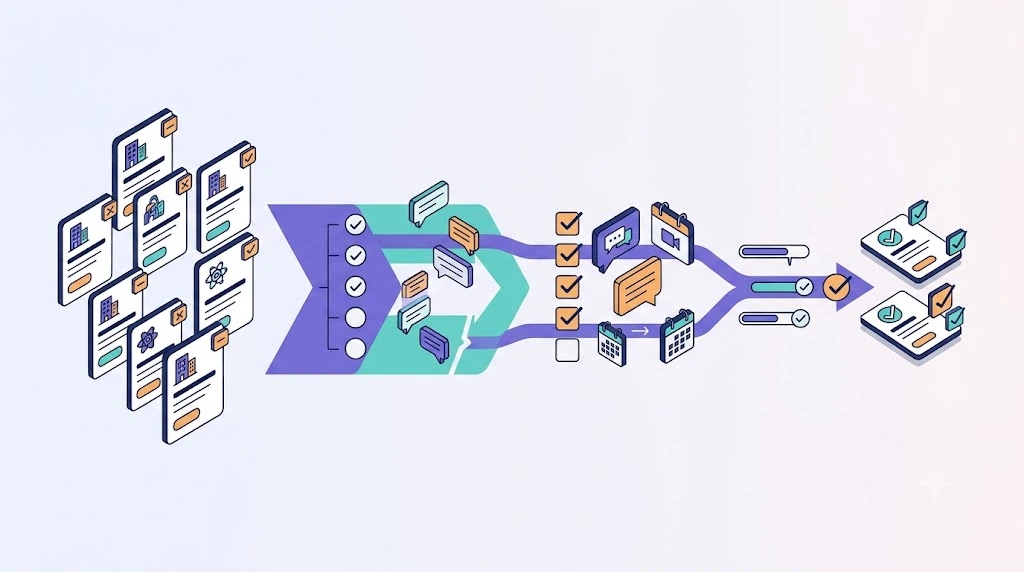
Define one narrow ideal customer profile. Build a list of 100 qualified companies that match it. Contact the decision-makers personally — not through a mass email tool. Sell a small, paid outcome instead of a full-blown subscription. Onboard those first customers by hand. Then look at which channel produced the most qualified conversations, and do more of that.
That’s the entire playbook. Everything below is just the “how.”
| Stage | Goal | Primary Action |
|---|---|---|
| Customers 1–3 | Validate the problem | Warm network and interviews |
| Customers 4–6 | Validate willingness to pay | Personalized outreach and paid pilots |
| Customers 7–10 | Find repeatability | Referrals and best-performing channel |
Step 1: Define a Narrow Ideal Customer Profile
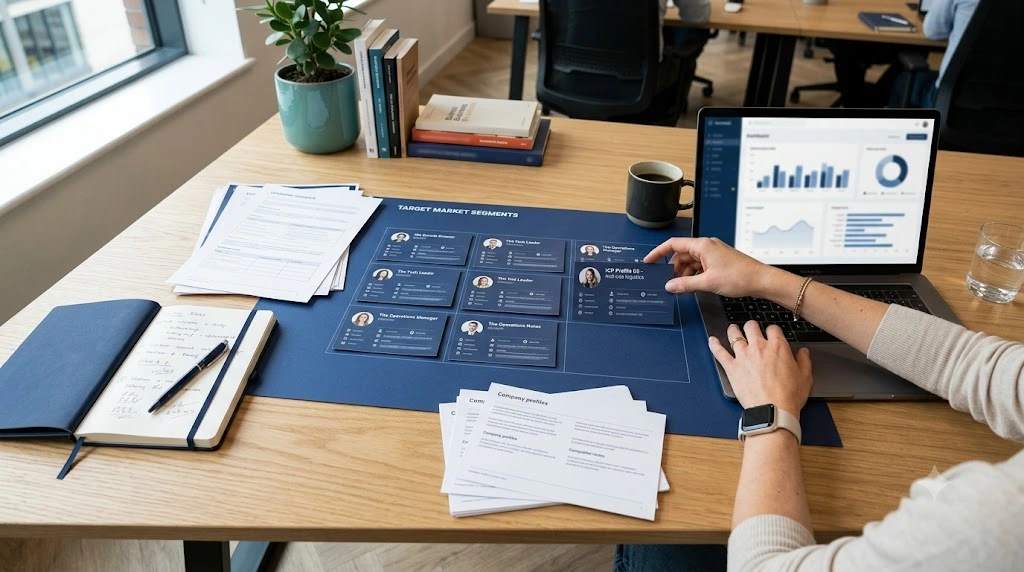
Broad targeting is the number one reason founders stall at zero customers. “Small businesses” or “marketing teams” isn’t an ICP — it’s a guess dressed up as a strategy.
A real ICP nails down:
- Industry
- Company size
- Buyer or job title
- The specific painful problem
- Their current workaround
- The trigger event that makes them start looking for a fix
- Their actual ability and willingness to pay
Use an ICP Statement
Write it in one sentence, and keep it visible while you work:
We help [specific buyer] at [type of company] solve [painful problem] when [trigger event] occurs.
If you can’t fill in every blank confidently, you don’t have an ICP yet — you have a hope. Getting this narrow is genuinely how to find B2B SaaS customers faster: a tighter target means sharper messaging, and sharper messaging means higher reply rates.
Step 2: Confirm the Problem Is Urgent Enough to Pay For
Before you write a single cold email, talk to 10 to 15 people who match your ICP.
Ask about their past behavior, not their hypothetical interest. “Would you use this?” is a useless question — everyone says yes to be polite. Instead, ask what they’re doing about this problem right now, what tool or workaround they’re using, and what it’s costing them in time or money.
If someone offers to pay before you’ve even built anything further, that’s real signal. Interest is cheap. A payment commitment is one of the strongest forms of validation because it demonstrates more than polite interest.
👉 Before you invest more time building, it’s worth reading how to test willingness to pay before building — it’ll save you months.
Step 3: Build a List of 100 Qualified Prospects
Once your ICP is sharp, go find 100 companies that match it exactly. Not 500 loosely-related leads — 100 precise ones.
Good sources for building this list:
- Your existing professional network
- LinkedIn (Sales Navigator if you have access)
- Industry directories
- Relevant online communities and forums
- Conference and webinar attendee lists
- Companies actively hiring for roles related to your product
- Competitor reviews on G2, Capterra, or similar sites
Track everything in one simple table:
| Company | Decision-Maker | Trigger | Pain Evidence | Outreach Angle | Status |
|---|---|---|---|---|---|
This is the unglamorous groundwork behind every good answer to “how to find customers for a SaaS startup” — it’s a list, not a hack.
Step 4: Start With Warm Introductions
Before any cold outreach, exhaust your warm network. It converts faster and builds trust instantly.
Reach out to:
- Former colleagues
- Existing clients from past ventures
- Advisors
- Investors
- Industry contacts
- Second-degree LinkedIn connections
Warm Introduction Request Template
Keep it short, and ask for an introduction — not a sale:
Hi [Name], I’m building [one-line description] for [specific buyer type] who struggle with [problem]. Do you know anyone at [type of company] dealing with this? Would love a quick intro if so — no pressure either way.
This works because you’re not asking your contact to vouch for your product. You’re asking them to make a connection, which is a much smaller favor.
Step 5: Send Personalized Founder-Led Outreach
Once warm intros run dry, it’s time for outreach — but done properly, not blasted.
A few non-negotiables:
- Every message should reference something specific and observable about that company
- Lead with the outcome you deliver, not a list of features
- Never force a demo in the first message
- Keep the call-to-action small and low-friction
- Have a follow-up sequence planned in advance, not improvised
Cold Email Template for B2B SaaS
Subject: Quick question about [specific process at their company]
Hi [Name], noticed [specific, relevant observation about their company]. Teams like yours often end up [likely business problem] because of it. We help similar companies [specific outcome] — worth a quick chat, or should I send more info instead?
LinkedIn Outreach Template
Hi [Name] — saw [specific, relevant detail]. We help [buyer type] with [problem] and thought it might be relevant to what you’re working on. Open to a quick chat, or happy to share more here first?
This kind of cold outreach for B2B SaaS works because it’s specific enough that it couldn’t have been sent to anyone else.

Step 6: Run Discovery Calls Before Giving a Product Demo
Resist the urge to demo on the first call. Understand the problem first.
Useful discovery questions:
- How do you currently handle this problem?
- What happens when the current process fails?
- How often does that happen?
- Who owns this problem internally?
- What have you already tried?
- What would make solving this urgent right now?
- Who ultimately approves the purchase?
When Should You Demonstrate the Product?
Only after you understand their problem and their buying process. Then show them the one or two workflows that actually matter to them — not a full feature tour.
Step 7: Sell a Small Paid Pilot
Free access may generate useful product feedback, but it does not validate willingness to pay. A structured paid pilot does both.
A good pilot has:
- A clear, limited scope
- A fixed duration
- One defined outcome to hit
- Clear responsibilities on the customer’s side
- Explicit success criteria
- A defined path to a standard subscription afterward
Sample paid-pilot offer:
Duration: 30 days Outcome: One measurable result Support: Founder-led onboarding Price: Discounted, but paid Next step: Standard subscription
This structure is one of the most practical answers to how to get first paying customers for SaaS — it removes the ambiguity of “free forever trials” and replaces it with a real commitment on both sides.
Step 8: Personally Onboard Customers 1–5
Do not hand this off. Set it up manually, get them to their first real value fast, and check in weekly. Document every point of friction and every objection you hear — this is pure gold for your messaging later.
One rule matters here: don’t rebuild your roadmap because one customer asked for one feature.
What to Learn From Each Early Customer
- Why they actually purchased
- Which message or channel worked
- Time to first value
- Product gaps that surfaced
- How likely they are to renew
Step 9: Use Customers 6–10 to Build a Repeatable Channel
By now, patterns should be visible. Identify your best-performing acquisition source, compare your winning customers against your ICP, and standardize the outreach message that actually worked.
Ask for a testimonial or a short case study. Ask for referrals directly — most founders don’t, and it’s a missed opportunity. And resist the urge to spread yourself across five channels at once. Pick the one that’s working and go deeper.
👉 Once this channel is repeatable, the natural next step is scaling it — here’s how to get your first 100 customers without paid ads.
A Real Example: How Paperflite Landed Its First Customers
It helps to see this play out in the real world.
Paperflite, a B2B sales-enablement SaaS company, was founded in 2016 by three co-founders — Anant Bhat, Vinoth Kumar, and Yega Kumarappan — who left stable corporate careers to build it. They raised a $400,000 seed round in January 2018, and never raised again. Within about a year of getting going, the company had grown from 2 customers to 26 B2B mid-market and enterprise customers, and by the founders’ own account, those earliest customers came directly through referrals and personal introductions — not advertising. That early, founder-led motion became the foundation for real scale: Paperflite went on to serve over 500 B2B organizations and reach seven-figure ARR, all without raising additional funding.
It’s a clean, verifiable illustration of the exact sequence in this guide: narrow focus, warm introductions first, and a repeatable channel built from what actually worked in the early conversations — not from a big marketing budget.
Sources: YourStory — “The Magic of Context: How Paperflite Powers Sales”, SaaS Club — founder interview with Yega Kumarappan
A Practical 30-Day Plan to Win Your First SaaS Customers
| Period | Actions | Target |
|---|---|---|
| Days 1–5 | Define ICP and interview prospects | 10 conversations |
| Days 6–10 | Build qualified account list | 100 companies |
| Days 11–20 | Warm outreach and personalized messages | 30–40 conversations started |
| Days 21–25 | Discovery calls and demos | 8–12 qualified calls |
| Days 26–30 | Offer paid pilots and follow up | First 1–3 customers |
A quick reality check: reaching all 10 customers may well take longer than 30 days. This plan gives you activity targets to hit, not a guarantee.
Metrics to Track Before Customer Number 10
| Metric | What It Reveals |
|---|---|
| Qualified prospects contacted | Outreach volume |
| Positive reply rate | Message and targeting quality |
| Discovery calls booked | Interest level |
| Pilot offers made | Sales execution |
| Paid customers won | Real validation |
| Time to first value | Onboarding effectiveness |
| Referral requests | Customer satisfaction signal |
Common Mistakes That Delay Your First 10 Customers
- Keeping the ICP too broad
- Treating a Product Hunt launch as a full go-to-market strategy
- Sending thousands of generic cold emails instead of a few sharp ones
- Giving every early customer free access indefinitely
- Jumping into a product demo too early
- Confusing customer feedback with actual purchase orders
- Running too many acquisition channels at once
- Outsourcing sales before the motion is even repeatable
What to Do After You Reach 10 Customers
- Segment customers by their actual reason for buying
- Watch churn and activation signals closely
- Document the channel that’s actually repeatable
- Turn your best customers into case studies
- Refine pricing based on what you’ve learned
- Only then start testing scalable content, partnerships, or paid acquisition
👉 This is also the right time to think longer-term — start by learning how to build a competitive business strategy.
Frequently Asked Questions
How do I get my first B2B SaaS customer? Start with your warm network — former colleagues, advisors, and existing contacts — and ask for introductions to people who match a narrow, specific ICP. Warm introductions often make early conversations easier because some trust already exists.
How long does it take to get the first 10 SaaS customers? It varies widely, but founders may need several weeks or months of consistent, founder-led outreach rather than a single 30-day sprint. Activity and consistency matter more than speed.
Should early SaaS customers receive the product for free? Generally, no. A small paid pilot — even at a discount — is a far stronger signal of real demand than free access, and it sets the right expectation for the relationship going forward.
Is cold email effective for getting B2B SaaS customers? Yes, but only when it’s highly personalized and sent in small, targeted batches. Generic, mass-blasted cold email tends to produce very low reply rates and can damage your sender reputation.
How many prospects should I contact to get 10 customers? Start with a carefully selected list of 100 qualified prospects, but do not assume that 100 contacts will automatically produce 10 customers. Conversion depends on your ICP, offer, pricing, urgency, and sales cycle. Track each stage and expand the list based on actual results.
Can I get SaaS customers without paid ads? Yes — this is exactly how most early-stage B2B SaaS companies get their first customers: through warm introductions, personalized outreach, and referrals, well before any paid acquisition makes sense.
Conclusion
Getting your first 10 B2B SaaS customers is primarily a founder-led sales challenge. It comes down to a narrow ICP, personal outreach that doesn’t feel like outreach, paid pilots instead of endless free trials, and onboarding your earliest customers by hand so you actually learn something from each one.
There’s no shortcut around the early conversations. But there is a clear next step.
In the next 24 hours: build a list of 20 qualified accounts that match your ICP, and start 5 real conversations. That’s it. That’s how the first 10 B2B SaaS customers actually happen.